Artificial Intelligence has been a wellspring of creative opportunity for writers and filmmakers for over a century. Here are some of the most memorable depictions in books, plays and films.
1920 – R.U.R., a play by Czech writer Karel Capek, coins the word “robot”. R.U.R. stands for Rossumovi Univerzální Roboti which translates to “Rossum’s Universal Robots” in English. Roboti comes from the Czech word robotník, meaning forced worker.
1927 – Metropolis, a silent expressionistic film from German director Fritz Lang based on Thea von Harbou’s novel, debuts in Germany. The film features a humanoid robot referred to as Maschinenmensch (which translated to machine human).
1950 - Several short stories by American writer Isaac Asimov, which appeared in various magazines during the previous decade, are collected and published under the title I, Robot. One of the stories, “Runaround,” includes the author’s Three Laws of Robotics:
- A robot may not injure a human being or, through inaction, allow a human being to come to harm.
- A robot must obey the orders given it by human beings except where such orders would conflict with the First Law.
- A robot must protect its own existence as long as such protection does not conflict with the First or Second Law.
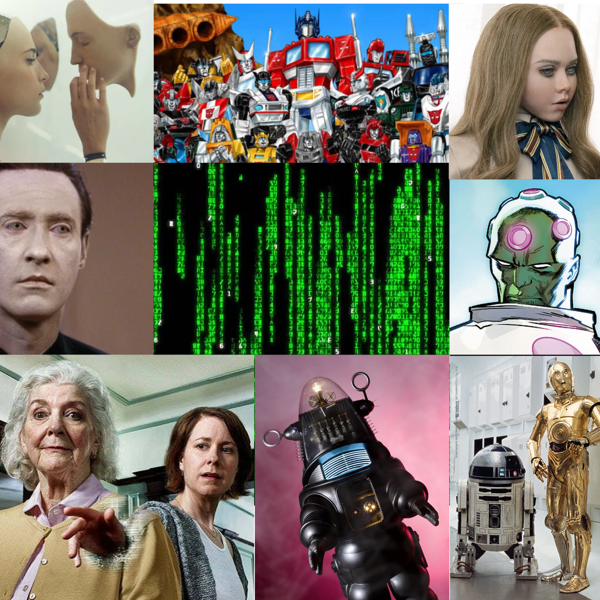
1956 - Forbidden Planet, an American science fiction film, features Robby the Robot, one of the most elaborate and expensive film robots built to date.
1958 - Brainiac debuts in DC Comics’ Superman-focused series Action Comics. The character is a superintelligent android created to conquer worlds across the universe and becomes one of Superman's greatest foes.
1968 – 2001: A Space Odyssey, a film by director Stanley Kubrick that was co-written with Arthur C. Clarke, features a sentient ship computer, HAL 9000. Depicted as a voice and a red camera lens, HAL begins to malfunction during the journey to Jupiter and attempts to kill the crew when they decide to disable him.
1968 – American author Philip K. Dick publishes the novel Do Androids Dream of Electric Sheep? The story follows a bounty hunter who “retires” six escaped androids.
1968 – Marvel Comics debuts their android supervillain named Ultron in an issue of The Avengers. Created by Hank Pym, Ultron develops a god complex and believes he can fulfill his mission of world piece by wiping out humanity. The evil android served as the primary antagonist of the 2015 film Avengers: Age of Ultron.
1973 – Westworld, a film written and directed by novelist Michael Crichton (Jurassic Park), is released. The film is set in an amusement park allowing guests to interact with humanoid robots in different historical environments. The park experiences technical malfunctions and the robots begin to attack the guests.
1975 – The Stepford Wives is released. The film is set in a small town where men have their free-thinking wives replaced by subservient robots.
1977: Star Wars is released and introduces two benevolent androids to pop culture: C3PO, a humanoid protocol droid portrayed by Anthony Daniels, and R2-D2, a utility robot played by Kenny Baker.
1978 - The Hitchhiker's Guide to the Galaxy premieres as a radio comedy series before being adapted into a novel the following year. Douglas Adams’s story features an autonomous robot named Marvin the paranoid android who is depressed and bored.
1979 - Alien, Ridley Scott’s sci-fi horror film, is released. The spaceship has both a sentient onboard computer (referred to as Mother) and a seemingly human character, Ash (played by Ian Holm), who is later revealed to be an android following directives from the company that value the lives of the human shipmates less than the murderous xenomorph alien.
1982 – Blade Runner, a sci-fi film based on Dick’s Do Androids Dream of Electric Sheep?, is released. Ridley Scott directs the film starring Harrison Ford as the bounty hunter Rick Deckard tasked with finding the escaped replicants. The final scene of the film is ambiguous as to whether Deckard is either a human or a replicant himself.
1984 – The Terminator is released. James Cameron’s action film follows a cyborg assassin (played by Arnold Schwarzenegger) from a post-apocalyptic future sent back in time to kill a woman whose child will save mankind from hostile machines. Skynet, the futuristic artificial intelligence who sent back the Terminator, became self-aware and saw humanity as a threat to its survival, sparking global war between humans and machines. The massive success of the film launched a franchise and in the next installment the Terminator is reprogrammed by humans in the future and becomes a heroic defender of mankind.
1984 - Transformers debuts as both a toy line and a syndicated television show. Depicted as alien robots who can mechanically transform themselves into vehicles, the heroic Autobots (led by Optimus Prime) defend hamanity from the evil Decepticons (led by Megatron).
1984 - William Gibson’s novel Neuromancer is published and popularizes the cyberpunk genre. The book, featuring an artificial intelligence recruiting humans into a heist plot, wins both the prestigious Nebula and Hugo Awards.
1987 – Star Trek: The Next Generation debuts as a syndicated TV show. Its cast of characters includes Data, an android played by Brent Spiner. Data observes humanity from an outsider perspective and forces the other characters to explain human thoughts, feelings and motivations to him.
1987 - RoboCop is released. A police officer who is mortally wounded is revived as a cyborg who can fight crime in Detroit far more ruthlessly than humans.
1999 – The Matrix is released. Set in a dystopian future where mankind is unknowingly trapped in simulated reality (called the Matrix) created by sentient machines as a way of keeping the imprisoned humans docile, rebels fighting for humanity’s freedom rescue Neo (played by Keanu Reeves) who they believe is destined to save them. The machines protect The Matrix with software called Agents who can attack humans in the simulated reality, causing them to die in the real world as well. The film by the Wachowski Sisters becomes a box office success and cultural touchstone.
1999 - Robin Williams stars as a household service robot who begins to have human-like emotions and creativity in the film Bicentennial Man.
1999 - The Iron Giant, an animated feature film adapted from the cold-war novel by Ted Hughes, premieres. The titular robot develops a friendship with 9 year old Hogarth who tries to protect the giant from government agents.
2001 - The video game Halo: Combat Evolved is released, featuring an artificial intelligence named Cortana who advises the main character.
2001 – Steven Spielberg’s film A.I. Artificial Intelligence depicts a childlike android (played by Haley Joel Osment) programmed with the ability to love and follows his experience with a family who lost their own child.
2004 - The film I, Robot borrows the name and three laws of robotics from Isaac Asimov for an original story about a police detective (played by Will Smith) investigating an android who has allegedly broken the rule against killing.
2005 - Dreamworks releases the animated film Robots, which features a world composed entirely of humanoids. The protagonist, Rodney, fights against forced upgrades to the robots.
2008: WALL-E, an animated film from Pixar, premieres. The title character is a trash compacting robot created to clean up an inhospitable Earth for future rehabilitation by humans. WALL-E wins an Academy Award for Best Animated Feature.
2008 – The film Iron Man includes an artificial intelligence J.A.R.V.I.S. (voiced by Paul Bettany) who has been created by Tony Stark and is incorporated into the Iron Man combat suit. In later Marvel films, J.A.R.V.I.S. is placed in a humanoid robotic body and becomes a hero known as VISION.
2013 – Her, a film written and directed by Spike Jonze, is released. It tells the story of a man (played by Joaquin Phoenix) who falls in love with a form-less artificial intelligence named Samantha (voiced by Scarlett Johansson). The film wins an Oscar for Best Original Screenplay.
2013 - Ann Leckie’s debut novel, Ancillary Justice, is published. The story follows an artificial intelligence within a human body seeking revenge against the leader who betrayed them. The book won both the Hugo and Nebula Awards.
2014 – Ex Machina is released. The film by Alex Garland follows an employee invited to his CEO’s secluded home to administer the Turing test to a female-presenting humanoid robot, Ava.
2014 - Big Hero 6, an animated Disney feature, premieres to rave reviews, eventually winning the Oscar for Best Animated Feature. The story follows Baymax, originally designed as a healthcare robot, and Hiro, as they try to avenge the death of Hiro’s brother. Despite numerous attempts to reprogram him towards violence, Baymax remains a compassionate robot.
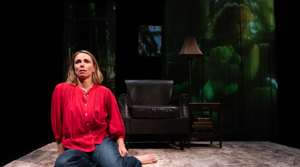
2015 - Jordan Harrison's play, Marjorie Prime, opens at Writers Theatre as the final production in the company's original Books on Vernon venue. Directed by Kimberly Senior and starring the late Mary Ann Thebus (the mother of Sisters director Jessica Thebus) along with Kate Fry, Erik Hellman and Nathan Hosner, the play explores the use of A.I. holograms designed for therapeutic use with dementia patients and the bereft.
2016 – Westworld, a television series based on the 1973 film, begins airing the first of four seasons. In this version of the story, the robots in the amusement parks gain sentience and seek revenge on the humans who used them in degrading servitude. The show lasts four seasons.
2016 - Peter Brown’s The Wild Robot is published. A sentient robot Roz is stranded on an uninhabited island after a hurricane and must adapt to a human-less environment. The book was later made into a 2024 film.
2017 - Martha Wells publishes the first installment, All Systems Red, in her Murderbot Diaries series. In the book, a humanoid robot built to protect humans on space missions instead prefers to watch soap operas.
2021 - The novel Klara and the Sun by Nobel laureate Kazuo Ishiguro tells a story from the perspective of Klara, an artificial friend to a chronically ill young girl.
2023 – M3GAN is released, depicting an artificially intelligent doll who becomes sentient and acts out violently to preserve its relationship with her human companion.
2024 - Maybe Happy Ending opens on Broadway. The musical follows two helper-bots in Seoul, South Korea, and the production won the Tony Award for Best Musical.
2026 – AI actress Tilly Norwood is set to star in its first feature film.